

Boro: The Japanese Art of Repair That the World Is Finally Seeing
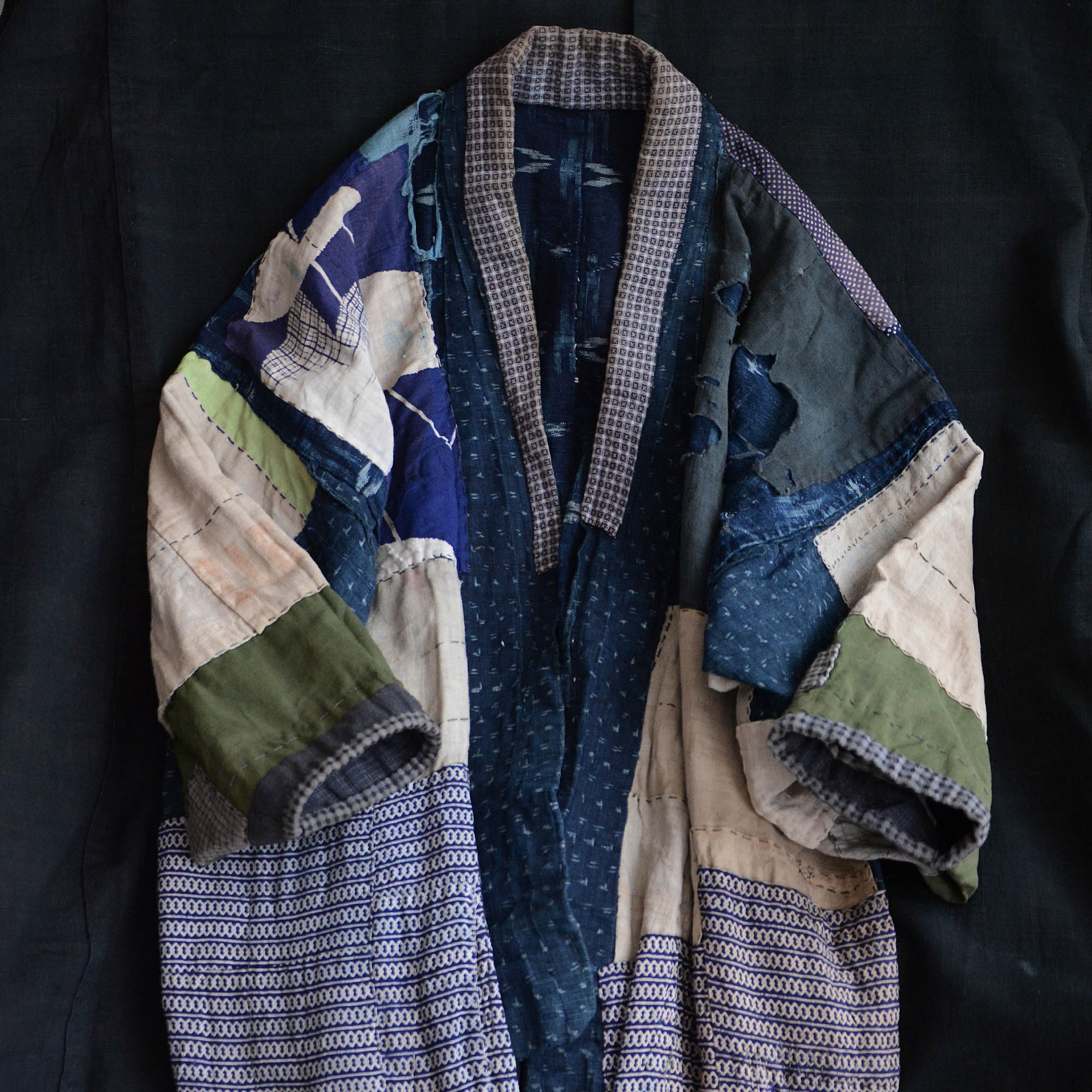
There is a word in Japanese for cloth that has been repaired so many times that the repairs have become the cloth itself. That word is boro.
From boroboro — meaning tattered, worn, falling apart — boro refers to Japanese textiles that have been patched, mended, and reinforced across years, decades, sometimes generations. Nothing was wasted. Everything was used.
Today, boro textiles are exhibited in museums in Japan, Europe, and the United States. This is your complete guide.
What Is Boro?

Boro is not a style. It is not an aesthetic. It is the result of necessity. Farming families in the Tohoku region could not afford to replace worn garments — they repaired them with whatever fabric was available. The result was not designed. It was discovered.
The History of Boro

The conditions that produced boro were specific to rural Japan during the Edo, Meiji, and Taisho periods. Cloth was precious. Garments were layered for warmth, repaired when damaged, and passed between family members across generations. A futon cover might be repaired by a grandmother, then her daughter, then her granddaughter. By the mid-20th century, boro had largely disappeared — the pieces that survived did so by accident, stored in attics and tansu chests.
Sashiko: The Stitch That Made Boro Beautiful

Boro and sashiko are inseparable. Sashiko (刺し子, "little stabs") is a running stitch technique from the rural workwear of northern Japan — originally functional, reinforcing areas of heavy wear and holding patches in place. Over time, the functional became aesthetic: waves, diamonds, hemp leaves, interlocking circles. Sashiko became a craft tradition in its own right.
Indigo and the Fabrics of Boro

Solid indigo — the most classic boro fabric, and the rarest in fine condition.
Kasuri — ikat-dyed cotton creating soft-edged geometric patterns.
Shima (stripe) — the most common fabric in boro noragi and monpe.
Komon — small-pattern cotton, often appearing as lining fabric or patches.
Types of Boro Textiles

Boro Noragi
The most iconic boro garment. Learn more about noragi →
Boro Futon Covers
Among the largest and most spectacular boro textiles, accumulating extraordinary complexity across generations of repair.
Boro Monpe
Work pants repaired as heavily as noragi, with reinforcement patches at the knees and seat.
Boro Furoshiki
Wrapping cloths showing the marks of daily handling in their texture and repairs.
Boro Fabric Pieces
Fragments prized by textile artists, sashiko practitioners, and makers.
How to Identify Authentic Boro

The fabric — Indigo showing genuine age: fading at points of wear, deeper color in protected areas.
The repairs — Functional, not decorative. Patches placed where the fabric wore through.
The sashiko — Working stitching that reinforces and holds.
Provenance — The best boro comes with a story: where it was found, what region, what it was used for.
Boro and the Global Market

The turning point was the work of Chuzaburo Tanaka, whose collection — now held by the Amuse Museum in Tokyo — introduced boro to a wider audience. Fashion designers — Rei Kawakubo of Comme des Garçons and Junya Watanabe — brought boro aesthetics to international runways. Today, the finest pieces command significant prices. The supply is finite. No new boro can be made.
Boro in Contemporary Fashion and Art

The boro aesthetic — visible repair, patchwork, indigo, the beauty of wear — has been absorbed into slow fashion and sustainable design. Kintsugi and wabi-sabi share the same philosophy: beauty found in imperfection and repair. Sashiko is now practiced globally as both craft and visible mending.
How to Wear and Use Boro Today

Wear it — A boro noragi over a plain tee and denim is one of the most compelling looks in contemporary vintage fashion.
Display it — A fine boro futon cover becomes a painting — made over decades by multiple hands.
Use it as material — Boro fabric brings genuine history and texture to any creative project.
Collect it — The finest pieces are genuinely appreciating in value. Supply is finite. Demand is growing.
Explore Boro-Related Collections
At NAMBA SHOUTEN, every boro piece has been individually sourced, inspected, and documented. Choose the path that fits your interest: wearable workwear, vintage cloth for making, or repaired Japanese trousers.
→ BROWSE BORO NORAGI & WORK JACKETS
→ BROWSE JAPANESE VINTAGE FABRICS
Related Articles
- Noragi: The Japanese Farmer's Jacket That Slow Fashion Has Been Waiting For
- Haori: The Japanese Kimono Jacket That the World Is Just Discovering
FOLLOW NAMBA SHOUTEN ON INSTAGRAM
Frequently Asked Questions About Boro
What is boro?
Boro is a Japanese textile tradition of patching, mending, and reinforcing worn cloth rather than discarding it. The word comes from boroboro, meaning tattered or ragged. Born of necessity in rural Japan, boro textiles were repaired across generations until the repairs became the fabric itself. Today they are collected by museums and fashion houses worldwide.
What is the difference between boro and sashiko?
Boro refers to the patched and mended textile itself. Sashiko is the running stitch technique used to reinforce boro repairs — originally functional, holding patches in place and strengthening worn areas. Over time, sashiko developed into a decorative craft tradition in its own right, with geometric patterns including waves, hemp leaves, and interlocking circles.
How do I identify authentic boro?
Authentic boro shows genuine age in its indigo — fading at points of wear, deeper color in protected areas. The repairs are functional, not decorative: patches placed where the fabric actually wore through. Sashiko stitching reinforces rather than decorates. The best pieces come with provenance — a known region, era, and use.
Why is boro valuable?
Boro is valuable because it is finite and irreplaceable. No new boro can be made — the conditions that produced it (rural poverty, handwoven cotton, generations of repair) no longer exist. The finest pieces are primary documents of Japanese material culture, and global demand from collectors, fashion designers, and museums continues to grow while supply shrinks.
What is boro fabric used for today?
Boro fabric is worn as fashion (a boro noragi over denim is one of the most compelling looks in contemporary vintage), displayed as textile art, used as material for sashiko and visible mending projects, and collected as an appreciating asset. Boro futon covers are particularly prized as wall hangings.
What is the difference between boro and wabi-sabi?
Wabi-sabi is the Japanese aesthetic philosophy of finding beauty in imperfection and impermanence. Boro is a specific textile practice that embodies that philosophy — the visible repairs, the faded indigo, the layered patches are all expressions of wabi-sabi in cloth form. Boro is wabi-sabi made material.