

What Boro Repairs Tell Us About a Japanese Noragi Jacket
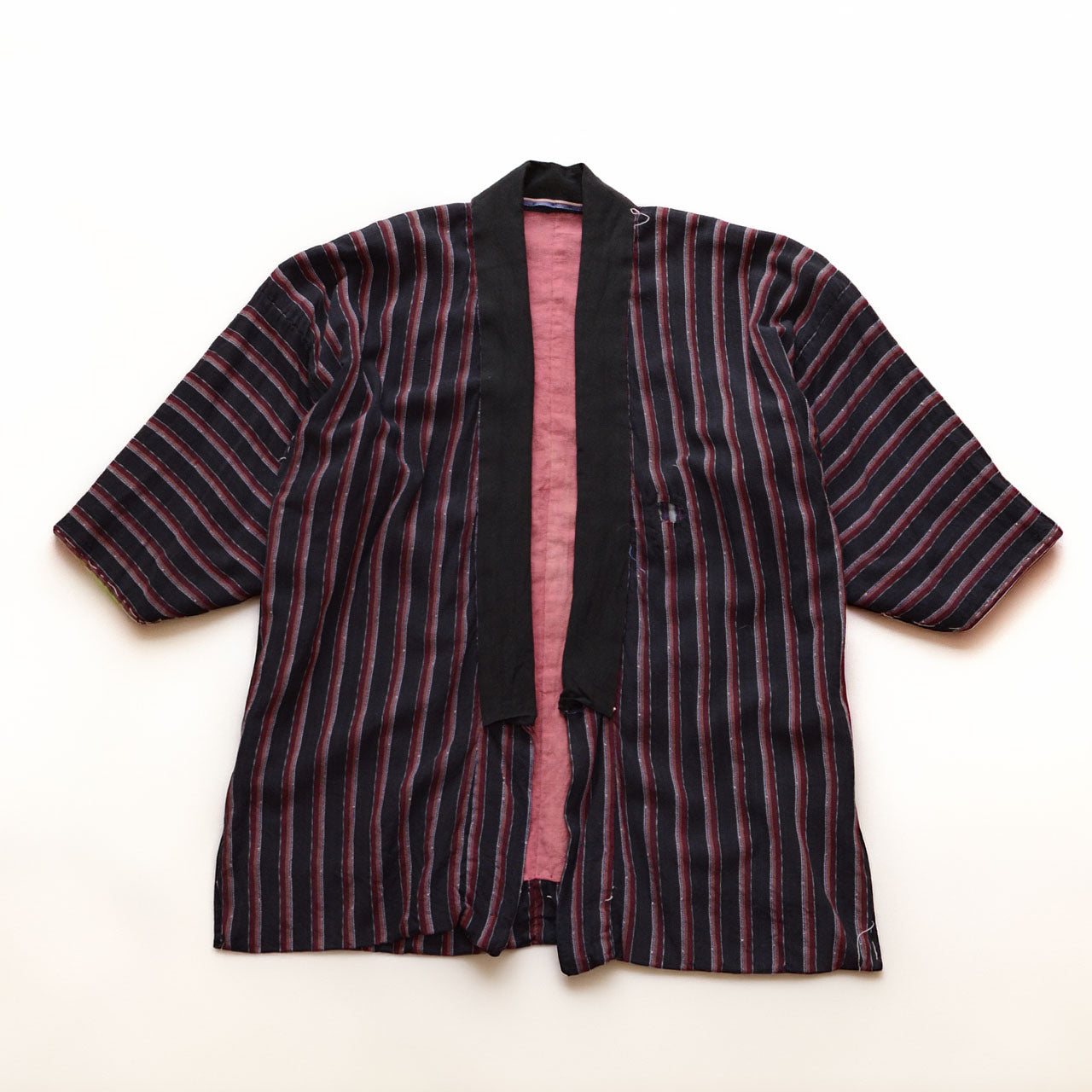
A Japanese noragi jacket can look simple at first glance: a relaxed shape, practical cotton, and an easy layer for everyday wear. Look closer, however, and the repairs begin to tell the story.
What does boro mean?
Boro is now widely recognized outside Japan as a word for textiles that were repaired, patched, layered, and used again over long periods of time. It is not one fixed pattern or decorative technique. It is a way of understanding cloth through care, necessity, and continued use.
Among vintage collectors, designers, and people drawn to slow fashion, boro has gained strong international attention because its beauty comes from visible use rather than perfect uniformity. A torn area could be reinforced with another piece of fabric. A weak seam could be repaired before it failed completely. A garment could remain useful even when its surface became uneven, faded, or visibly worn.
The repairs were part of the garment’s life, not something to hide.
Reading the repairs on a noragi
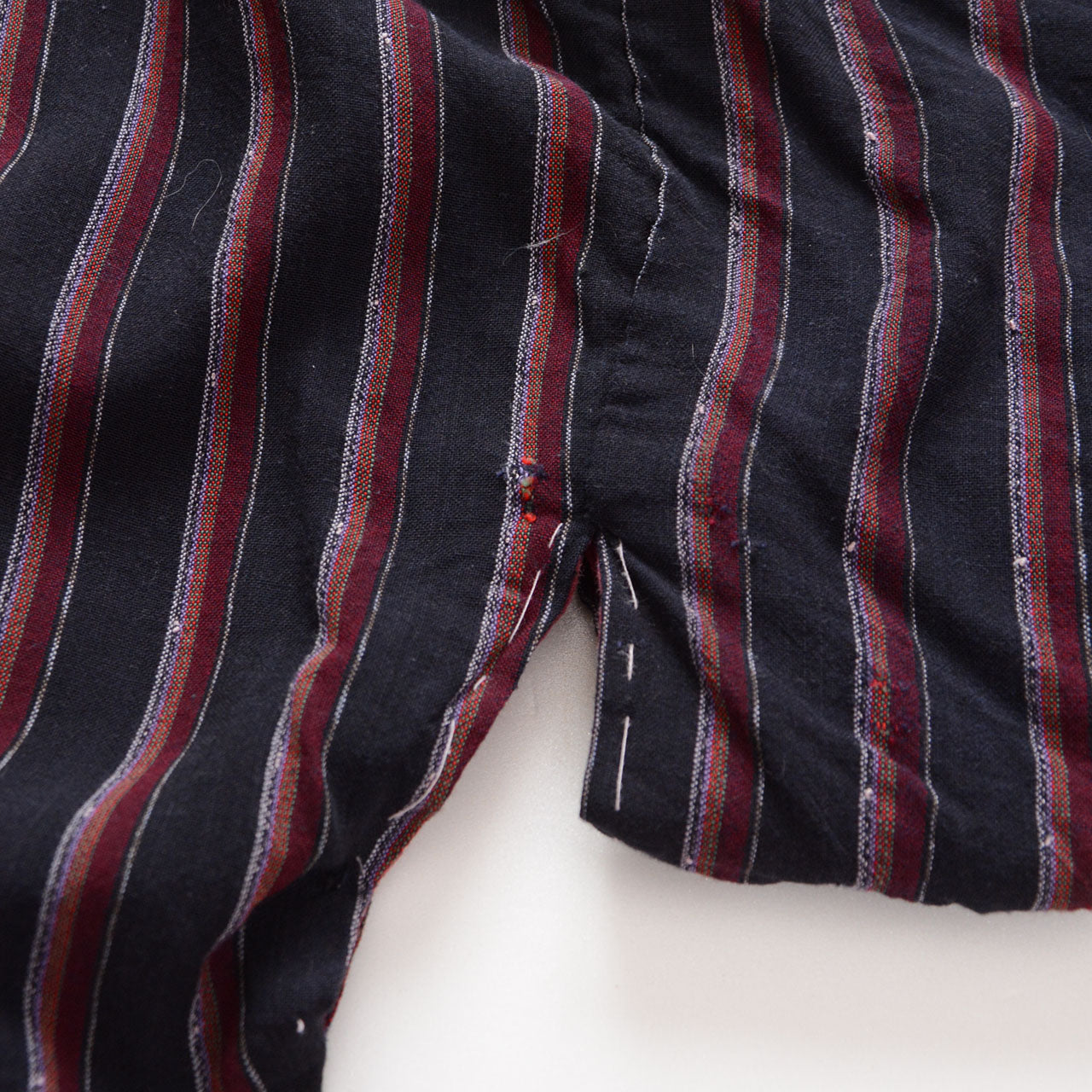
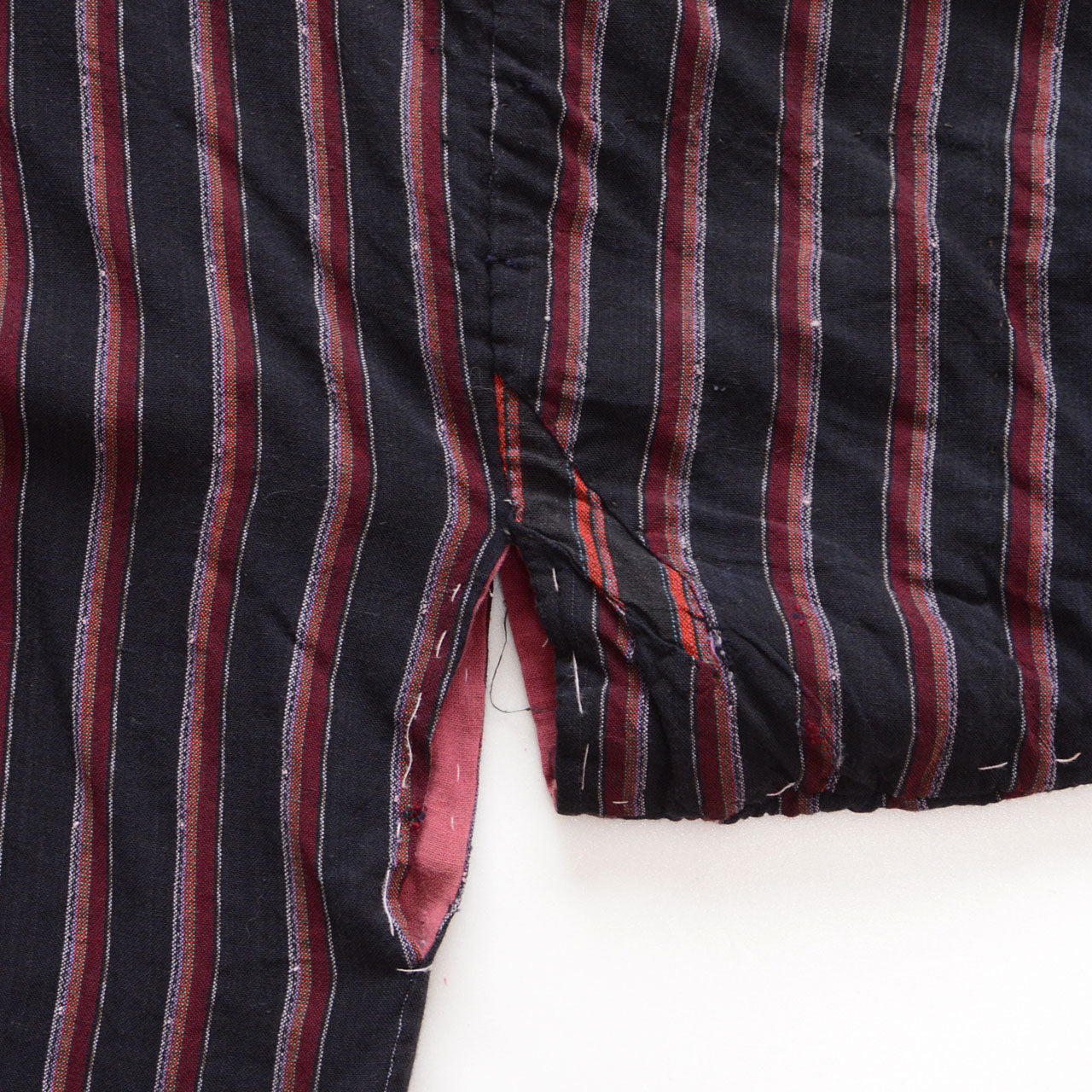
This vintage noragi offers a particularly clear example. Its dark striped cotton outer fabric has been worn and repaired over time. The Miyatsuguchi, or underarm opening, carries a substantial repair.
Another boro repair remains beside the collar. The black patches, loose threads, fraying, and uneven surfaces are not random decoration. They show where the garment needed attention and how someone chose to keep using it.
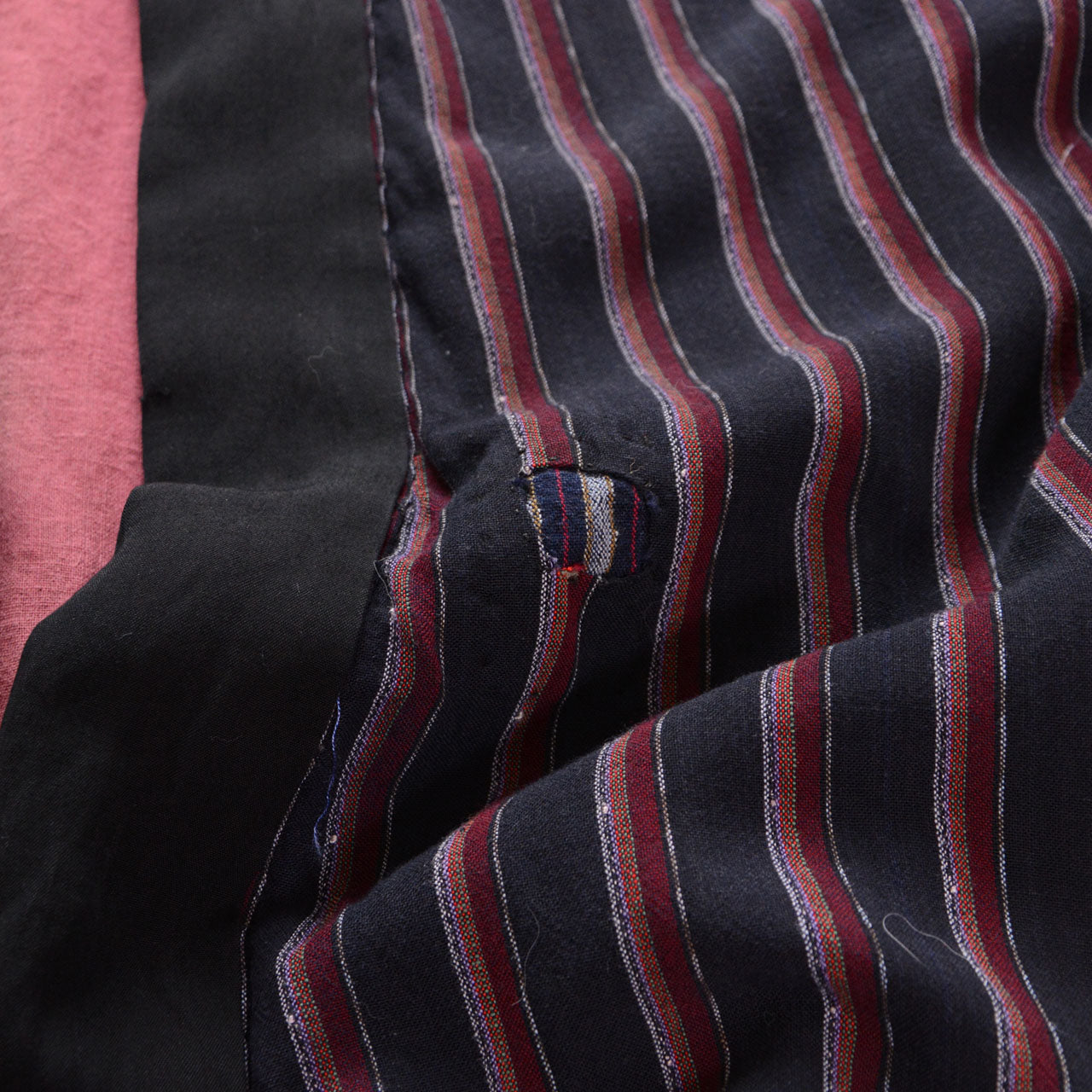
Even the areas that look imperfect help us understand the noragi as workwear rather than as a newly made fashion reproduction.
The surprise inside
The strongest contrast appears when the jacket opens. Behind the dark striped cotton is a salmon-pink lining, a vivid detail that changes the mood of the entire garment.
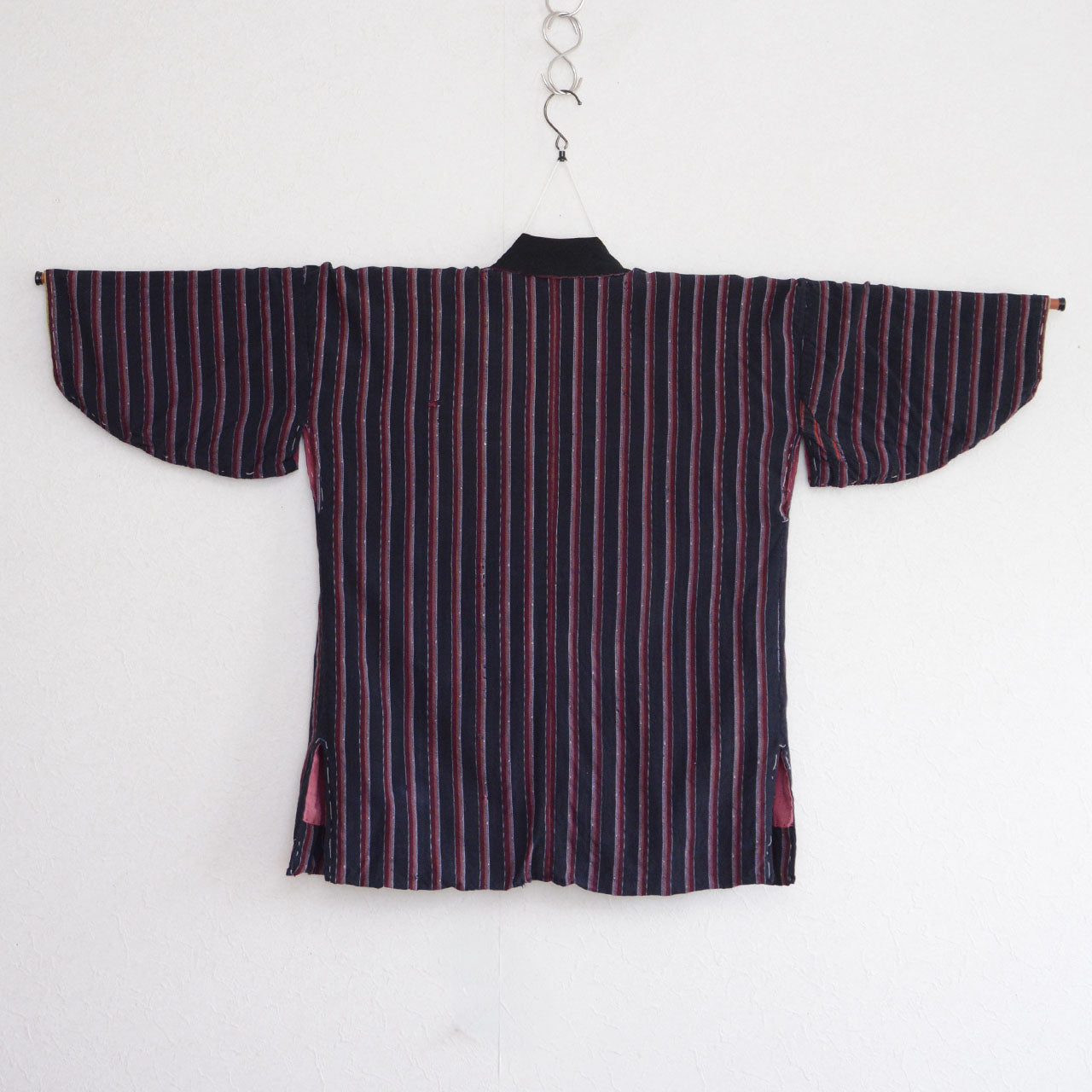
This contrast between a practical outer layer and an unexpectedly soft interior is what makes this noragi memorable. It is sturdy without looking severe, and worn without losing its sense of character.
Why noragi still belong in a modern wardrobe
Noragi were made for movement and daily work, which gives them an ease that translates naturally into contemporary clothing. The relaxed shape works over a T-shirt or a thin shirt. The cotton layer is useful during the changing temperatures of spring and autumn, and it can also be worn indoors in summer when air conditioning makes the shoulders and arms feel cold.
For someone interested in Japanese vintage, slow fashion, old-house living, gardening, or handmade objects, a noragi offers more than an unusual silhouette. It is a garment with visible evidence of being used, repaired, and kept.
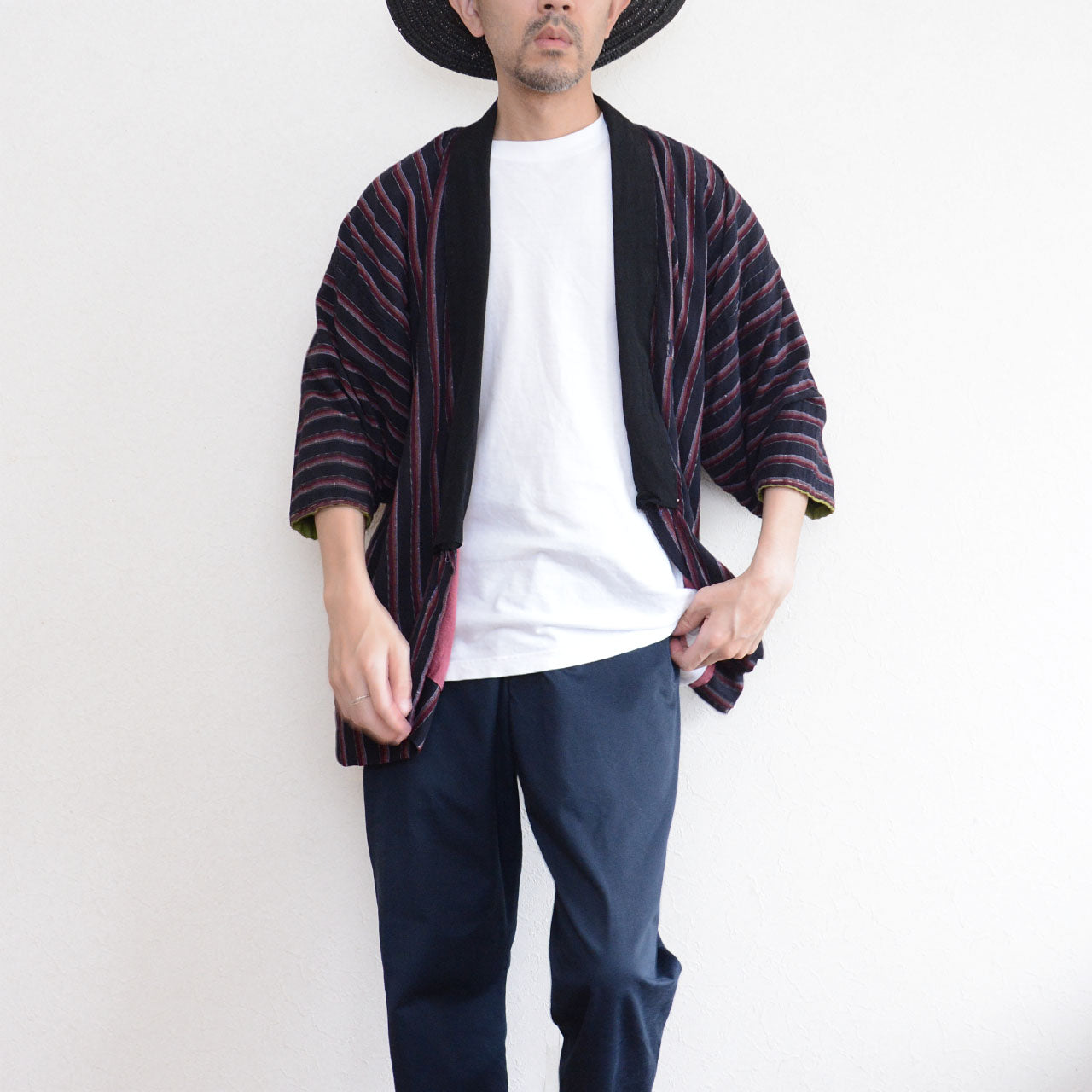
This particular noragi is available as a one-of-a-kind piece, with its striped cotton, salmon-pink lining, Miyatsuguchi repair, and collar-side boro repair.
Follow more Japanese vintage workwear and textile stories on Instagram.